Thursday, March 3, 2011

Latterals: The Spicy Reds

Sight
All three wines exhibit a medium to medium+ intensity of ruby possibly suggesting intense wines of higher extractions. Wine #2 has a more pronounced watery rim, which could indicate a higher level of alcohol.

Aromatics
On the nose, all three wines have medium to medium+ intensity of aromas, with many notes of baked and jammed fruits, which indicated these wines came from a warmer climate. Aromatics on wine #1 include dark cooked berries, spice, and some smokiness. Wine #2 has more aromatics of red jams. Wine #3 smells of figs and port. Wines #1 and #2 have light aromatics of vanilla, suggesting oak influence.

Palate
On the palate, all wines show higher levels of alcohol and all lack high acidity, supporting the view that these wines come from a warm to hot climate.

Wine #1 has spicy fruit on the palate with medium- acidity, medium+ alcohol, and medium- burlap tannins. This wine is probably most prized for its structure.

Wine #2 is dry, though seems sweet on the attack suggesting very ripe fruit. The wine has medium acid, high alcohol, and a medium+ finish of fruit and vanilla, and heat from alcohol. This wine is definitely from a hot climate.

Wine #3 is also dry but seems sweet on the attack, suggesting very ripe fruit. The wine has medium acid, medium+ cottony tannins, and a medium- finish of cooked figs and dark fruits.

Conclusions
Wine #1 is a Malbec from a warm climate (Mendoza, Argentina) because of its firm structure and spicy fruit. The firm structure would also suggest Cabernet Sauvignon or Nebbiolo, but neither would would not exhibit such spicy fruit, and Nebbiolo would not have such a saturated color. The Malbec also distinguishes itself from the Shiraz and Zinfandel because it is lack of overly ripe fruit.


Wine #2 is a Shiraz from a warm climate (Australia) due to its high alcohol, soft texture, and very ripe fruit. This description could also fit a warm climate Grenache or Merlot, but Grenache is typically not as saturated in color. I rule out Merlot because I would expect more cocoa and espresso characteristics to accompany the ripe fruit aromas.

Wine #3 is a Zinfandel from a warm climate (California). The tell-tale aromatics of figs and port lead me here and the medium+ amount of tannins is likely from oak influence, a common technique used for Zinfandel. The firm structure could also suggest Malbec, but I would expect spicier fruit from Malbec.

The wines
Wine #1: Altos Las Hormigas Malbec 2009 (Mendoza, Argentina), $13, 14.2% abv
Wine #2: Woop Woop Shiraz 2009 (Australia), $13, 14.5% abv
Wine #3: Joel Gott Zinfandel 2008 (California), $18, 14.4% abv


How’d I do?

Tuesday, February 22, 2011

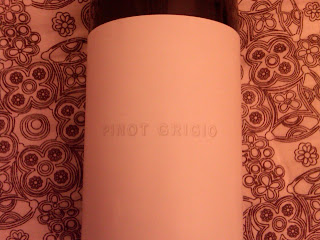
Channing Daughters, Pinot Grigio 2009 (Long Island) $20, 12.5% abv

::: peeking out :::

Hi.

Remember me?

You probably thought this blog was dead.

Well, it was mostly dead. See, there's a big difference between mostly dead and all dead. Mostly dead is still alive.

And as such, I still have things -- well, wine mostly -- that I want to talk about. For instance, this 2009 Channing Daughters Pinot Grigio.


This wine is 100% Pinot Grigio made from grapes coming from both Channing Daughters' Bridgehampton estate on the South Fork of Long Island (aka The Hamptons) and Mudd's vineyard on the North Fork. Aromatics are heavily weighted towards orchard fruits (especially golden delicious apples and pears) and pretty white flowers.

I found the palate to be medium weight with juicy acidity -- not too searing, not too soft. The wine was aged in a mix of stainless steel and various-sized oaks that helped elevate this to a classy sort of Pinot Grigio (not to be confused with the water-like cheap & cheerful versions all to prevalent in the marketplace). There was also a gentle wash of Lemonheads outside shell (ya know? The sweet outside part? Not the sour middle?) and bitter zest on the finish that I really enjoyed.

I opened this wine at home with a pu-pu platter from the local ghetto Chinese takeaway joint. The caramelized plummy spare ribs were a bit too intense (but I was dreaming of a Loire Valley gamay for that) but the Channing Daughters wine stepped up as a refreshing counterpoint to the fried chicken wings.

That's right. BBQ spare ribs and fried chicken wings. Only authentic Chinese takeaway for me.

Monday, May 24, 2010

Leftovers from a cocktail party


After volunteering with the Manhattan Cocktail Classic last weekend, I missed the boat on taking leftover booze home, but I did raid the walk-in for leftover ingredients.


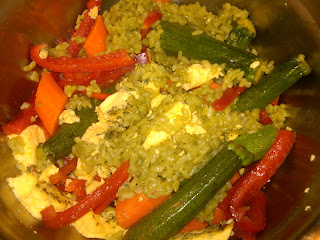
That’s how I ended up with cocktail-leftover salad. There’s something satisfying about clearing out the refrigerator and making something new. In this case, I simply chopped up the veggies (I already had the carrots) and blanched the carrots and baby zucchini. The veggies were tossed in a dressing made of the lemon juice and olive oil. The egg whites were baked with chopped herbs (thyme & sage), and all of the above were mixed with cooked bamboo rice and chilled. An orange for dessert. The English cucumber was used for…a simple lunch tomorrow of cucumbers and cheese (what were you thinking?)


Ok, maybe not the most delicious thing I’ve ever created (technically, this is a wine blog, so don’t come here for recipes and inspiration) but it was fun and filling.

Seeing as I only used about a tablespoon of a ½ gallon jug of lemon juice, I used more lemon juice (plus simple syrup) to make a saké lemonade.


Yum.

Sunday, May 23, 2010

Oak in drinks

At The Standard Grill in the Meatpacking District for a bite.

Interesting cocktials. I ordered their version of a mint julep, which is made of bourbon, mint and oak-infused simple syrup.

The cork dork is literally drinking oak juice!

Sunday, May 9, 2010

Altos Las Hormigas, Vineyard Selection Reserva Malbec 2007 (Mendoza, Argentina) $19, 14.6% abv

Tips for pairing wine with procrastination:

1. Do choose a wine that is widely available, either via your own cellar or at the wine shop. Since you really should be writing the chapter that’s due this evening (I’d like to point out that there is technically still three hours of “Sunday” left), you shouldn’t be opening something you’d linger over. Plus if it turns out you open a bottle you dig, you can always go back for another when you don’t have a deadline looming.

2. Do choose something on cheap & cheerful side. Again, since you really need to churn out four more pages (single spaced), don’t be getting into a wine so profound that it distracts you from your storyline.

3. Do choose something that might turn you on. Some writers talk about making a soundtrack to get them into the mood to write. Like that background music, you need to pick a wine that balances your need for it to fade into the background (so you can concentrate on nailing dialogue) with keeping your mojo flowing.

4. Do choose a wine that is versatile enough to pair with anything lurking in the deep recesses of your refrigerator. Staring at a blank Word document long enough will cause you to wonder if the caramelized onions you made this morning will taste good wrapped around pickled okra. Or is that just me?

5. Don’t choose a wine high in alcohol. For obvious concentration reasons.


So the Altos Las Hormigas wins on all points but the last one. It’s absolutely saturated in a purple-y ruby all the way to the rim with lots of staining tears. Yet the nose is not super-explosive, and it’s dominated by blackberries and dried black cherries with granite and a hint of florals. It’s medium (+) in body with velvety tannins, medium amount of acid, and flavors of bright blackberry and more granite on the palate.

As for the alcohol, I didn’t really smell it or taste it harshly on the palate. Just to be safe (as the book is not just going to write itself), I recommend pairing this wine with Procrastination Pizza. Tonight I’ve chosen Mystic Pizza, but you may feel free to substitute your favorite frozen pizza here.


Transparency: this wine is imported by my employer.

Friday, April 23, 2010

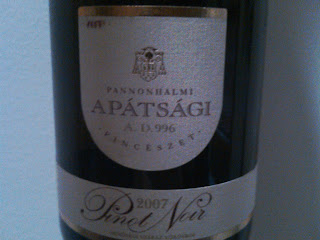
Pannonhalmi Apatsagi, Pinot Noir 2007 (Pannonhalma, Hungary) $25, 12.5%

Wow. I really like this wine.

Blinded this on the train with the boys, and it was guessed right away as a Pinot Noir due to its pure, fresh red fruits and some wet-stone minerality. The word 'elegant' was used a number of times.

So varietal established, where is it from? Given the elegance, the debate started in Burgundy...a few decent producers were thrown out there, but when pressed for a commune, the gang settled on Bourgogne Rouge from a pretty good producer. New Zealand and Oregon were briefly considered and discarded because one would expect a little more extraction and concentration from these places (the wine was a pale ruby red).

Ha! A Hungarian Pinot Noir! Swing out with your bad self!


Pannonhalma lies about half way between Budapest and Vienna and is one of the smallest of Hungary’s 22 wine regions. This estate is an old monastery that grows plenty of traditional Hungarian grapes (Welchriesling, Ezerjó and Sárfehér) as well as international varieties like this Pinot Noir.

To me the Apatsagi would be appealing to Burgundy drinkers, though I didn't get any forest-floor-mushroom-whatnot earthiness that I typically get from that part of France. The acid was rather soft compared to a Burgundy as well. Still, the pure, bright red fruits (nothing green) were nicely framed by some sweet oak notes. That pretty fruit base was enhanced by a streak of minerality, juicy acid, and a fine texture, making the Apatsagi a delicious, unusual find.

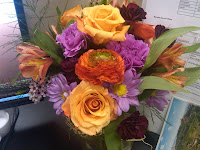
(The wine is almost as pretty as these flowers.)

Transparency: this wine is imported by my employer.

Saturday, April 17, 2010

Faiveley, ‘Les Lavières’ 2004 (Nuits-Saint-Georges), $50, 13% abv

Stood up on a Saturday night.

If a guy says ‘don’t worry, I’m not a player’, that means he’s totally a player, right?

Could someone remind me why I should be all enthusiastic about being single?

*sigh*

Oh wait! Ha! I just remembered: being alone means I can order up whatever wine I want without having to consider stylistic or budget preferences of my significant other!

Burgundy it is. (Nah nah.)

The evening is starting to look up.


The 2004 vintage was not a ripe year for Burgundy and some wines I’ve tasted are downright mean & green. I bought some anyway because it’s the clichéd wine to drink while you’re waiting for your 2005s to mature. Still, I have some friends who gag at the vintage the same way they would gag if presented with pureed White Castles at a dinner party (ha! You thought it was paté!!) But I’m not a hater on the 2004 Burgs because a) I’m not overly sensitive to green notes, and b) it’s nice to know that the wines of this under-ripe vintage were not Tammy Faye’d out to be something bizarre.

Faiveley is a fairly large (for Burgundy) vineyard owner and winemaker based in Nuits-Saint Georges. ‘Les Lavières’ is not a 1er Cru (as it is in Savigny-les-Beaune) , but a lieu-dit, or named vineyard without being all special enough to be classified. A few other producers (including Daniel Rion and Domaine Leroy) make wine from the same vineyard.

This Burgundy was not showing that green note typical of the 2004 vintage, though rather stemmy on the palate. Overall, I find wines from Nuits-Saint-Georges to be more towards the masculine side, but this wine was bursting with full-on strawberries, like the first strawberries of the season that are stronger in florals than ripe aromatics. And there was a really strange floral thing going on. Strange because it wasn’t white blossoms or red roses but it was so familiar. It was…fabric softener scent: fresh and borderline soapy.

Huh.

So not quite the happy ending I was looking for on this solo Saturday night either, but the wine paired just fine with last week’s episode of The Biggest Loser (courtesy of hulu.com).