Showing posts with label tasting notes. Show all posts

Sunday, December 4, 2011

Wine Basic Tastes and Structure

I’m terrified by the Practical in the Master of Wine exams, which is another way of saying I suck at blind tasting. I did about average (for me) in my tasting group this week, but I was disappointed and how little structural components I could get out of each glass. So I've prepared several mixtures to look at some of the basic structures that make up wines: sugar, acid, and alcohol.

I had three empty and cleaned wine bottles. For sugar I dissolved 3T in water then diluted it up to a 750ml. I used the juice of two lemons for acid and diluted it up to 750ml. And alcohol was represented by a half of a small bottle of vodka diluted to 750ml (so about an 11-12% abv solution).


Components

Sweetness: I was surprised to learn that sweetness, something I always looked for on the tip of my tongue as that’s what everyone says, wasn’t found there for me. Turns out I register sweetness on the back of my palate by my molars, though really the sensation washes over everything.

Acid: This is a very localized sensation on the sides of the tongue extending into the cheeks. And there’s also that unmistakable mouthwatering sensation that hits with acid. I heart acid.

Alcohol: This one is complicated. I definitely taste a bitterness (like almond skins?) towards the back of my palate, but I don’t get the ‘sweetness’ that many folks talk about with alcohol. I added another splash of vodka directly to my glass and that just made me gag. Texture-wise, alcohol certainly has ‘weight’, especially if you swish with water first to immediately compare. And it spreads around, i.e., it is not super-concentrated on any part of the tongue. But at the moment, I think I need to look for that bitterness to indicate higher alcohol levels.


Balance of Components

Acid/Alcohol (50/50): I suppose this showcased that elusive sweetness in alcohol. The mouthwatering nature of the acid was blunted by the alcohol mix, though possibly also by sheer dilution.

Sugar/Alcohol (50/50): Ok, unlike the last blend, this one showed no dilution of sugar, therefore the alcohol base does exhibit sweetness. Just not overtly. To me. The blend allowed the sweetness to wash over my palate (courtesy of alcohol) and when I immediately compared it to the sugar base, I was back to localized sweetness. Interesting.

Sugar/Acid (50/50): This is why good wine is so cool. Both the sugar and the acid were present and you could shift your attention back and forth between them. Balance defined.

Sugar/Acid/Alcohol (one third each): A crude version of wine. The acid made my mouth water and was tempered by the sugar, which was spread around by the alcohol. Otherwise, the flavor was disgusting.


More Practice is Needed

My solutions were pretty primitive for this exercise. I’ve dusted off my old copy of Baldy’s The University Wine Course, and in addition to my regular tastings, will try to get through the tastings presented in Schuster’s Essential Winetasting (which has been the inspiration of today’s exercise). At a minimum, I'm ready to pay a lot more attention to structures.

Tuesday, February 22, 2011

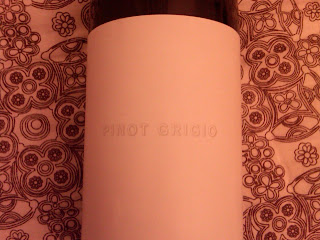
Channing Daughters, Pinot Grigio 2009 (Long Island) $20, 12.5% abv

::: peeking out :::

Hi.

Remember me?

You probably thought this blog was dead.

Well, it was mostly dead. See, there's a big difference between mostly dead and all dead. Mostly dead is still alive.

And as such, I still have things -- well, wine mostly -- that I want to talk about. For instance, this 2009 Channing Daughters Pinot Grigio.


This wine is 100% Pinot Grigio made from grapes coming from both Channing Daughters' Bridgehampton estate on the South Fork of Long Island (aka The Hamptons) and Mudd's vineyard on the North Fork. Aromatics are heavily weighted towards orchard fruits (especially golden delicious apples and pears) and pretty white flowers.

I found the palate to be medium weight with juicy acidity -- not too searing, not too soft. The wine was aged in a mix of stainless steel and various-sized oaks that helped elevate this to a classy sort of Pinot Grigio (not to be confused with the water-like cheap & cheerful versions all to prevalent in the marketplace). There was also a gentle wash of Lemonheads outside shell (ya know? The sweet outside part? Not the sour middle?) and bitter zest on the finish that I really enjoyed.

I opened this wine at home with a pu-pu platter from the local ghetto Chinese takeaway joint. The caramelized plummy spare ribs were a bit too intense (but I was dreaming of a Loire Valley gamay for that) but the Channing Daughters wine stepped up as a refreshing counterpoint to the fried chicken wings.

That's right. BBQ spare ribs and fried chicken wings. Only authentic Chinese takeaway for me.

Sunday, May 9, 2010

Altos Las Hormigas, Vineyard Selection Reserva Malbec 2007 (Mendoza, Argentina) $19, 14.6% abv

Tips for pairing wine with procrastination:

1. Do choose a wine that is widely available, either via your own cellar or at the wine shop. Since you really should be writing the chapter that’s due this evening (I’d like to point out that there is technically still three hours of “Sunday” left), you shouldn’t be opening something you’d linger over. Plus if it turns out you open a bottle you dig, you can always go back for another when you don’t have a deadline looming.

2. Do choose something on cheap & cheerful side. Again, since you really need to churn out four more pages (single spaced), don’t be getting into a wine so profound that it distracts you from your storyline.

3. Do choose something that might turn you on. Some writers talk about making a soundtrack to get them into the mood to write. Like that background music, you need to pick a wine that balances your need for it to fade into the background (so you can concentrate on nailing dialogue) with keeping your mojo flowing.

4. Do choose a wine that is versatile enough to pair with anything lurking in the deep recesses of your refrigerator. Staring at a blank Word document long enough will cause you to wonder if the caramelized onions you made this morning will taste good wrapped around pickled okra. Or is that just me?

5. Don’t choose a wine high in alcohol. For obvious concentration reasons.


So the Altos Las Hormigas wins on all points but the last one. It’s absolutely saturated in a purple-y ruby all the way to the rim with lots of staining tears. Yet the nose is not super-explosive, and it’s dominated by blackberries and dried black cherries with granite and a hint of florals. It’s medium (+) in body with velvety tannins, medium amount of acid, and flavors of bright blackberry and more granite on the palate.

As for the alcohol, I didn’t really smell it or taste it harshly on the palate. Just to be safe (as the book is not just going to write itself), I recommend pairing this wine with Procrastination Pizza. Tonight I’ve chosen Mystic Pizza, but you may feel free to substitute your favorite frozen pizza here.


Transparency: this wine is imported by my employer.

Wednesday, March 17, 2010

Gypsy Dancer Estates, ‘A&G Estate Vineyard’ Pinot Noir 2006 (Dundee Hills) $53, 13.9% abv


“Wines that dance in your mouth” promised the cork.

A slight exaggeration, but a delicious wine nonetheless. I made some venison potstickers, so my thoughts went to an Oregon Pinot Noir to pair it.

The Gypsy Dancer was grown biodynamically on the famous volcanic Jory soils of Oregon, and had all the earthy dark fruit of a higher-priced California Pinot Noir but without the accompanying alcohol burn I sometimes get in those.


The color was ruby (just shy of a medium intensity…you could certainly read through it) with a very thin rim. I don’t think I would mistake it for a Burgundy on sight or aroma profile, which was not too intense, and included damp moss, dark raspberry, blackberry, cocoa, baking spices, and a small truckload of vanilla (is it just me? I love cocoa in a wine, but cocoa and vanilla? Not my favorite). On the palate, the Gypsy Dancer was a good balance of medium body, alcohol, and dusty tannins. Classic medium (+) acidity for Pinot Noir was intact. The blackberry finish pleasantly went on for a bit. I’m not sure I’d hold on to this wine for a long time as the vanilla is liable to take over after the fruit fades.

Wednesday, February 3, 2010

A Night of 1988 Burgundies

And so it was, that on a Tuesday a few weeks ago, that yours truly plus eight others descended upon Apiary to help relieve a friend of several 22-year old Burgundies.

1988 was the year that construction on the pyramid at the Louvre began, and also considered an excellent year for Burgundy. Many critics said the weather that year produced healthy grapes overall, though structures were firm and would need time to soften. Perfect! Overall, I think these wines are enjoyable now, and in some cases (choose your producer carefully), have some more time to go.

I’d be negligent to not mention that Apiary runs a free-corkcage on Monday night. The restaurant has a very wine-friendly menu (the chef was brought over from Veritas) and includes a $35, three-course pre-fixe menu too. I think it’s an excellent place to take a first date. Especially if she’s a redhead.

After we dispensed with a bottle of Champagne, here’s what we drank:

Prince de Florent Merode, ‘Le Marechaudes’ (Corton)
Started off slow with a wine that was pleasant enough, but started to shut-down after 15 minutes. It was of medium intensity showing all the characteristics of a red Burgundy (dried cherry, forest floor, some white pepper) before it closed up, never to recover. It was past its prime.

Turns out this house is known for making wines that are meant to be consumed immediately (a restaurant wine). They don’t macerate on the skins and only press gently so that the emphasis is on fresh fruit and no bitter tannins.

About Corton: like Chablis, it’s a Grand Cru divided into a collection of climates (including Marechaudes). When Chardonnay is planted here it’s called Corton-Charlemagne.

Don’t you love Burgundy?

Prince de Florent Merode, ‘Clos du Roi’ (Corton)
This wine displayed much more brooding earthiness, structure, and the fruit was holding up much better than in the Marechaudes. Clos du Roi has a better sun exposure and more lava in the soils.


Comte Armand (Domaine du Clos des Epeneaux), ‘Clos des Epeneaux’ 1er Cru (Pommard)
Medium-intensity with relatively youthful red and blue fruits and a slight amount of wet earthiness. The structure was very well resolved. This wine was a favorite by most of the crowd.

In the 1980s when this wine was made, the domaine only made this one 1er cru (since the 1850s really) and that’s why it adopted the name (kinda like Clos de Tart in the Cotes de Nuits). As they don’t have much to work with, the grapes are harvested by the age of the vine (so, 5-10 years old, 10-20 years old) and vinified separately like that. Later the lots are blended to make their one bottling. Today they own many more properties.

‘Clos des Epeneaux’ is not on many maps because it straddles ‘Les Grand Epenots’ and ‘Les Petits Epenots’.

Marquis d’Angerville, ‘Clos des Ducs’ 1er Cru (Volnay)
Marquis has always sounded more regal to me than king or emperor, and it’s fitting that this is one of the most respected domaines in Burgundy. Most of the domaine’s holdings are in Volnay with this and ‘Champans’ 1er Cru the largest parcels. I see these wines on many restaurant’s lists.

The wine was a little more shy than the last few but had a strong forest floor component that I love, and a gorgeous velvet texture on the palate.

Joseph Drouhin (Latrecieres-Chambertin)
A little dank but otherwise dark fruits, sweet red fruits, and a slight minerality. A touch on the too-advanced side, but not a total waste of time.

Drouhin owns many vineyards throughout Burgundy (and Oregon) and is also a negotiant. I find the wines to be honest and reliable, maybe occasionally exciting, but I think it’s an easy house to buy. Latrecieres-Chambertin is a negotiant bottling.


Domaine Louis Trapet (Latrecieres-Chambertin)
Compared to the Drouhin, this was a more youthful and expressive Latrecieres. Red cherry, earthiness, and even gaminess made this wine complex.

Trapet has been around for many generations, and I find the wines to be a consistently good.

Domaine Dujac (Echezeaux)
Ah, Dujac. I can count on the wines from this house to be rather powerful (for Burgundy). I believe this is due to a combination of waiting for ripe grapes and use of 100% new French oak on all 1er Crus and Grand Crus. At 22 years old, this wine was still singing.

Aromas included strawberries, blackberries, red flowers, wet earth, and baking spices. The length held on to fruit and acid, and went on forever and ever.

Domaine Dujac (Clos de la Roche)
I adore Morey-Saint-Denis, but have been only lukewarm on Clos de la Roche Grand Cru. Despite this, this was one of my favorite wines of the night. This vineyard catches a lot of sun, and, as the name suggests, is on very poor, rocky soils, so we might see more concentrated grapes. Maybe I just drink Clos de la Roche too young?

This wine displayed wonderful red and dark fruits, with baking spices, stones, damp earth, and a savory aspect. Palate is velvetly and still showing bright acidity.

Domaine de la Romanee-Conti (Richebourg)
DRC, the holy grail of Burgundy, did not fail me. Do you know the feeling I’m talking about? If this wine was not spectacular, I probably would have sold my whole cellar for charity and become a bingo-announcer for a retirement community in south Florida.

This wine was just gorgeous. Cherries and figs, exotic spice box, forest floor, roses, soy sauce, a length that went for a long time displaying all those elements again. The structure was a whisper on the firm side, just enough to suggest that this wine still has a long, healthy life ahead of it.

A moment to reflect on happiness please.

OK, last wine of the night:

Mongeard-Mugneret (Richebourg)
Tough coming on the heels of DRC but still a beautifully expressive wine. The difference here was that fruit was more cherry and cranberry, plenty of dank earthiness, and baking spices didn’t seduce the way the DRC did. This wine was still plenty ripe and drinking beautifully, and is worth searching out.

This domaine owns a lot of parcels throughout Burgundy with Richebourg being one of the smallest holdings. We were blinded on the Echezeaux later but I failed to write down any notes. Sorry.


Domaine Leroy (Richebourg)
I lied. We had one more wine. But it was off. Doesn't count, though I have hit-or-miss with Leroy, so I was really looking forward to this one.

Monday, February 1, 2010

Grand Sichuan is one of the finest BYOs in the city, if only because German Rieslings are my favorite wine. The residual sugar and intensity of flavors on German wine are a perfect match to the spicy cuisine (and you can eat a feast without spending more than $40 per person). Only downside: you should bring your own stems. Their glasses are pretty small.

A small gathering of friends descended on the Grand Sichuan in Chelsea last night for pork soup dumplings, smoked tea duck (multiple orders), cucumber with garlic, spicy beef, chicken with pumpkin, beef with spicy green pepper, and a bunch more. Here’s what we drank:


Pierre Peters, ‘Cuvée Spéciale’ Blanc de Blancs Brut 1998 (Champagne), $NA, 12% abv
Just as you start your day with coffee, I support starting your evening with bubbles. This wine was showing loads of yeasty brioche notes with some bruised apple in the background. Very creamy on the palate.


F.X. Pichler, Dürnsteiner Hollerin Riesling Smaragd 2007 (Wachau), $60, 13% abv
I had a sip of this after the bubbly and tried it again later, but, as to be expected, it didn’t show well after the German wines. On first sip this was classic Austrian Riesling: medium (+) intensity lean citrus and a truck-full of minerals. Dry on the palate with juicy acidity and a long finish.


Dr. R. Weil, Kiedricher Wasseros Riesling Auslese 1976 (Rheingau), $NA, 10% abv?
Oh, how I love old German Rieslings! And this was a special treat. There was seepage from the cork, but I find this usually means nothing for a German wine. Intense aromas of tropical and exotic fruits meet wet stones and honey and stone fruits and a touch of petrol. The acidity still keeps this wine very fresh and it still has a long life ahead of it.


Wegeler, Bernkasteler Doctor Riesling Spätlese 2001 (Mosel), $30, 10% abv
This one displayed more primary citrus aromas, florally apricot, peaches and minerals with a lot of zing (maybe a CO2 prickle?) on the palate.


Mönchhof, Erdener Prälat Riesling Auslese 2007 (Mosel), $40, 10% abv?
Youngest German wine in the set still displayed an impressive amount of pretty aromatics: peaches, pears, honeysuckle, and minerals. Off-dry on the palate and a long finish. Really drinking well right now.

Somebody’s Niersteiner Pettental Riesling Beerenauslese 1976 (Rheinhessen), $NA, 8% abv
Oy. You can imagine by the end of the night, note-taking gets a little fuzzy. I failed to write down this name of the producers, thinking I had it captured on the pic (sorry, lesson learned). My friend had purchased a bunch of 1976 German Rieslings at auction from producers neither of us had ever heard of. On to the wine: popped & poured, the wine was showing nothing but botrytis (i.e., new plastic shower curtain) at first but within 10 minutes the mangoes, honey, and pineapple came out to play. Beautiful, silky texture on the palate and a medium-long finish. Not the richest or the most intense BA I’ve ever encountered, but it was a wonderful dessert to go with our lame-advice fortune cookies.

Wednesday, January 27, 2010

Lenz Winery, Gewürztraminer 2003 (North Fork of Long Island), $18 (for most recent release, 2006), 12% abv

Full disclosure: I worked the wet 2005 vintage at Lenz on the North Fork. More disclosure: I love Gewürztraminer.

Granted, I didn’t mean to hold on to this one for over six years. Gewürztraminer reaches high levels of sugar naturally, so they are characteristically high in alcohol and low in acid. Not a winning combination for aging a wine. Still, I find that wines from the North Fork are picked on the early side (especially when compared to a place with fabulous weather like California), and the fact that this wine is clocking in at 12% abv suggests that it’s part of that pick-early trend, so this wine is moderate on both alcohol and acid.

The Lenz Gewürztraminer is a medium gold, indicating its high levels of extract. Medium-intensity aromas of tropical fruit, spices, and the signature lycee turn into an oily mouthfeel with more tropical fruits on the palette. The acid is soft, as would be expected, and here the finish is somewhat clipped.

Overall it’s an unusual Gewürztraminer for its low alcohol and intensity if we’re going to compare it to Alsace and Germany. But that’s not at all a fair comparison.

So I say bravo for not being Chardonnay!

But back to aging Gewürztraminer: have you had any success? For how long would you hold one of these?

Sunday, January 24, 2010

Black Ridge, Pinot Noir 2006 (Central Otago, New Zealand), $29, 13.5%

A few years back I was a Garagiste Wine junkie. It was a painful day I had to unsubscribe to their tempting emails, but I had a mortgage to pay, so no more impulse buys (damn you, internet). It was that bad.

I’ve had a 90% success rate with Garagiste’s selections, meaning I never tasted a thing they offered before I bought it, and I loved 90% of that. To me, that’s an awesome hit rate. And their draw is very affordable wines too. See why I was heading down a path to poverty?

On to the wine.

It’s actually really yummy. Burgundy it is not, but the wine is going down the path of ripe California fruit + minerality like you’d find in Burgundy + New Zealand funk I get on a lot of Central Otago wines. All three components in equal amounts. That green rot ‘funky’ has always turned me off on New Zealand Pinot Noirs, and here it’s subtle enough to add complexity. Medium intensity of classic red-fruit Pinot Noir aromas jump out at you and the sour fruit finish goes on for about 30 seconds. Really yummy. Sad I only picked up four bottles.

Saturday, January 23, 2010

1997 Chateau Carras (Cotes de Meliton), $26 (retail), 13% abv

Where??!


Do you know?


Don't scroll down yet!


I’ll give you a hint – this wine was a Bordeaux blend plus a little Limnio.


Give up?


It's from Greece.

Cotes de Meliton is on the Khalkhidhikhi peninsula in northeastern Greece. (Yea, I can’t believe you didn’t get that either.)


Yep, at CityZen last night in Washington DC, I had a 12-year-old Greek wine to go with my venison. Ok little wine. $80 was price of admission for the novelty (way overpriced list overall, but it's located in a hotel).


‘Twas an elegant, rather than brawny, Bordeaux blend. Didn't draw much out of the additional Limnio.


In other words, the wine was meh.

Nikolaihof ‘Von Stein zu Mautern’ Riesling Smaragd 2002 (Wachau), $50, 12.5% abv

I’m a sucker for locally-driven and organic cuisine, so should you ever find yourself with a free night in Washington DC, I recommend heading over to Nora in the Dupont Circle area. Nora is America’s first Certified Organic Restaurant meaning 95% of the ingredients are organic. But don’t go thinking this is a ‘health food’ restaurant. Instead, take comfort knowing that the quart of heavy cream used in your risotto is organic heavy cream.

In addition to a lovely seasonal menu, Nora presents an interesting wine list. The list is sprinkled with top organic and biodynamic producers including Chave, Meo Camuzet, Tablas Creek, and even Nicholas Joly’s Coulee de Serrant (my favorite wine in the world, ahem, in case you’re looking for a birthday gift idea).

However, I skipped the 2004 Coulee de Serrant on the list last night (I prefer them closer to ten years old) in favor of a 1990 Nikolaihof ‘Vinothek’. The damn thing was corked and they couldn’t sell me another. (By the way, I have a theory about the high rate of corked wines from Austria in the early 90s but will save it for another post.) I ended up enjoying a 2002 Nikolaihof ‘Von Stein zu Mautern’ Riesling.


Side note, the Wachau area in Austria has its own quality designations for wines based on grape ripeness (three special levels in the Wachau). Smaragd (smah-RAHG) is the highest level of ripeness, with an alcohol level of more than 12%.

On to the wine: I love Rieslings with age on them for the petrol notes they develop. In this case, I found intense aromas of stones and minerals jumping out of the glass where I thought petrol would have developed. (These were my immediate scribbling before I found out that ‘Von Stein’ means ‘from stones’.) Otherwise, I got loads of lemon zest, ripe yellow apples and pears. The palette is well-balanced between its medium body, acid, and finish. This is a dry Riesling, though not painfully so. I find Nikolaihof wines to be less austere than other producers in Austria.


One last note, see that ‘Demeter’ logo on the back label? Nikolaihof is a biodynamic producer. Biodymanic goes a step beyond organic farming by incorporating lunar rhythms into decisions in the vineyard and winery. Seriously. More for another post…

Wednesday, January 20, 2010

Chateau d’Auvernier, Chasselas 2008 (Neuchâtel, Switzerland), $25, 11.5% abv

Finding unusual wines that are affordably priced on a wine list is one of life’s joys. On a recent weeknight visit to Artisanal, I tried a white wine from Switzerland made from the Chasselas grape. Made by Chateau d'Auvenier in the Neuchâtel region of Switzerland (Neuchâtel is in Western Switzerland just over the border from France's (and Switzerland's) Jura region).
Let me just stop and say that I love that they offer about 100 wines by the glass at the restaurant, both as a taste or a glass. France dominates the by-the-glass wine list followed by the United States, but Italy and Spain gets their own section too. There are also southern hemisphere wines so you can get your Australia/Chile/Argentina fix as well. There’s a bottle list beyond that including a good selection of half bottles, but with so many by-the-glass options (and I find turnover to be fast enough that I’ve not had a dead wine yet), I haven’t had a reason to commit to a full bottle.


Back to the wine. Chasselas (aka Fendant in the Valais region of Switzerland) is grown in France and Germany with some distaste, but the grape has found a home in Switzerland where it is the most planted grape variety.
This wine showed medium intensity aromas of ripe lemons, grapefruit peel, stones, and something of a Alpine mountain floral-ness. It seemed to have a little more weight in the mouth than the alcohol would suggest, and the medium amount of juicy acidity mingled with lemon and a slight amount of pine flavors. It was a little too light to be a perfect match for the Duck Bourguignon I ordered, but this was a case of matching a unique wine to the person, not the dish. I’d like to serve this as an aperitif or a picnic wine on a hot summer day.

Saturday, January 16, 2010

Channing Daughters “Sylvanus” 2008 (The Hamtons, Long Island) $24, 12% abv

I spend a lot of time on the east end of Long Island and the wines from Channing Daughters have always charmed me because they bottle grapes outside the popular international varieties. Tocai Friulano, Gewurztraminer, Aligote, Blaufrankisch, and Dornfelder are not typical grapes that come to mind when thinking about Long Island wine. Vinification techniques are not so straight forward either, with winemaker Christopher Tracy co-fermenting field blends, allowing wild yeast fermentations, and good ol’ foot-stomping of the grapes. For the really esoterically-inclined, he even uses a ripasso and solera process on a single red wine bottling (“Over & Over” series), and has an ‘orange wine’ made from pinot grigio fermented on its skins (“Ramato”).

Generally speaking, when a wine is made, the grapes, say Muscat, are picked & fermented on their own schedule depending on their ripeness, and then another, say Pinot Grigio grapes, would proceed the same on their own time, maybe a few weeks before or after the Muscat. The two separate wines would then be tasted, measured out, and blended together to make the final product.

Not this guy.


The Sylvanus is described as a ‘vin de terroir’ as it is a field blend of grapes that are randomly grown together, harvested at the same time, and then fermented together. This allows the wine to express the terroir of a single vineyard in a snapshot of time. Sounds romantic and all, and lucky for us, the final wine here is a gorgeous expression of the Sylvanus vineyard on the South Fork.

Sylvanus is a field blend of 43% Msucat Ottonel, 44% Pinot Grigio, and 13% Pinot Bianco. The wine is very pale straw color, and not completely starbright, reflecting its minimal handling in the winery. Medium-intensity aromas of lemon, stones, green apples, and pears develop into flavors of more meyer lemons, honeysuckle flowers, melon, and crisp green apples in the mouth. The wine is on the light side of medium bodied, with medium tingly acidity, and a minerally finish.

I had this with an easy weeknight dinner of breaded pork cutlet with lemon pan sauce over spinach, but this would be a great aperitif or as a fabulous match for ocean’s candystore of oysters and scallops.

(Sorry for the shiny pic. Silver label was giving me some trouble…)